

There’s no absolute good or bad between bladeless and bladed pendant fan lights (including concealed and traditional bladed types); their advantages and disadvantages mainly depend on your specific usage scenario and personal needs. Bladeless models have clear advantages in safety, ease of cleaning, and aesthetic design, making them more suitable for families with children or spaces that prioritize a minimalist style. Bladed models, on the other hand, generally excel in wind power, affordability, and adaptability to larger spaces.
Core Feature Comparison: Choosing Based on Key Needs
When choosing a pendant fan light, you need to weigh the following core features:
Safety: Bladeless designs completely eliminate the safety hazards posed by rotating blades, making them especially suitable for families with infants or pets. Bladed pendant fan lights (regardless of whether the blades are concealed) pose a potential risk of injury from the blades.
Cleaning and Maintenance: Bladeless pendant fan lights have no blades or complex mesh covers, making daily cleaning very simple—just wipe the surface. Bladed pendant fan lights require regular cleaning of the blades, which is relatively troublesome. Wind Power and Coverage: Traditional bladed fan lights (especially those with non-retractable straight blades) typically offer stronger airflow and a wider coverage area, making them more suitable for large spaces like living rooms. Retractable fan lights also provide good airflow even with the blades extended. Bladeless fan lights, on the other hand, often use circular or linear airflow, resulting in a more concentrated airflow and smaller coverage area, making them more suitable for areas like dining rooms where strong airflow requirements are lower or where targeted airflow is needed.
Airflow Experience: High-quality bladeless fan lights utilize technologies like air multiplication to produce a more even and gentle airflow, reducing the harsh feeling of a direct breeze. However, some earlier or lower-end bladeless products may have a harsher airflow. The airflow of bladed fan lights depends on the number and design of the blades; multi-blade fans (such as those with five or more blades) generally provide a gentler breeze.
Noise Level: Noise levels are closely related to the motor technology and quality of the specific product. Bladeless or bladed fan lights using high-quality DC brushless motors can achieve low-noise operation. It’s not possible to simply say which type is absolutely quieter; when purchasing, pay attention to the noise level of the specific product (e.g., below 40dB).
Price and Design: Bladeless ceiling fan lights are generally more expensive than bladed models due to their higher level of technological integration. Bladeless ceiling fan lights, especially traditional bladed models, offer a wider price range. In terms of design, bladeless ceiling fan lights have a minimalist and modern look, while concealed ceiling fan lights completely hide the blades when off, visually resembling ordinary ceiling lights; both blend well into modern home styles. Traditional bladed ceiling fan lights may have a more decorative or retro feel.
Match the Best Type Based on Your Usage Scenarios
Identifying your core usage scenarios will help you make a quick decision:
Children’s rooms, bedrooms, or families with pets: Prioritize bladeless ceiling fan lights. Their bladeless design provides the highest level of physical safety and operates quietly without disturbing sleep.
Living rooms, large dining rooms, or spaces with high ceilings: Bladeless ceiling fan lights are recommended, especially larger models (e.g., 52 inches and above). They offer stronger airflow and wider coverage, quickly regulating the airflow throughout the space. Retractable fan lights (with retractable blades) are also an option that balances aesthetics and airflow power.
For those seeking minimalist aesthetics, easy maintenance, or small apartments: Bladeless fan lights or retractable fan lights are ideal. They feature a clean, uncluttered design, save space (dual-purpose), and are easier to clean.
For those on a limited budget or needing strong airflow: Traditional bladed fan lights (including retractable models) offer better value and often provide greater airflow at the same price point.
Other Key Considerations When Purchasing
Besides type selection, the following points are also crucial:
Motor and Core Performance: The quality of the motor directly determines the fan’s lifespan, noise level, and energy consumption. Prioritize products using DC brushless motors, as they are generally more energy-efficient, quieter, and have a longer lifespan. Also, pay attention to the motor material; pure copper or high-quality silicon steel sheet motors offer more stable performance. Control and Smart Features: Remote control is currently the most convenient method, with some products also supporting mobile app or voice control. Timer functions and multi-level adjustment of fan speed and lighting (such as 6 fan speeds and 3-color dimming) greatly enhance usability.
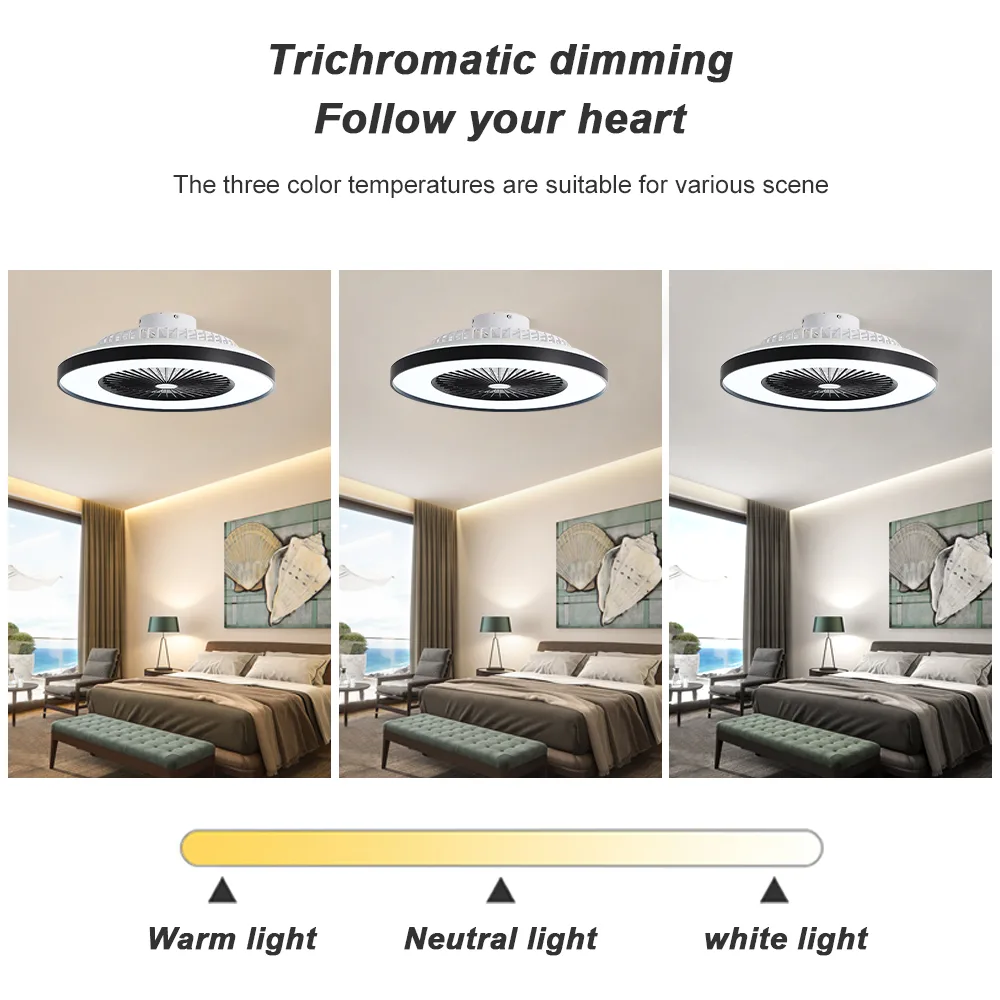
Lighting Quality: Pay attention to the light’s color rendering index (Ra value). Products with Ra ≥ 95 offer better color reproduction, especially suitable for rooms with reading needs. Adjustable color temperature (such as white light/warm light) adapts to different scenarios.
Size and Installation: Choose the appropriate size based on room size. For example, a 36-42 inch light is suitable for a 10-15 square meter space, while larger spaces require 50 inches or more. Before installation, confirm your ceiling height. For low ceilings (below 2.4 meters), choose a ceiling-mounted light; for average ceiling heights, choose a pendant light.