

🌀 What is a ceiling fan?
A ceiling fan is a fan installed on the ceiling that generates airflow by rotating its blades, thereby improving indoor ventilation and increasing coolness. Compared to air conditioners, ceiling fans are more energy-efficient, cover a larger area, and operate quietly.
📌 Key Factors to Consider Before Buying
| type | Features | Suitable environment |
|---|---|---|
| Standard ceiling fan | Approximately 5 fan blades, classic model | Living room, master bedroom |
| Industrial ceiling fan | Large fan blades and strong wind | Large living room, garage, commercial space |
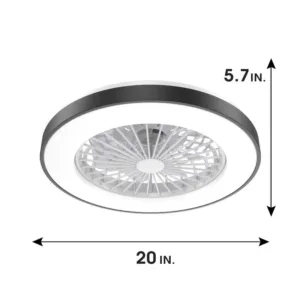
| Retractable blade ceiling fan | When the fan is not running, the blades retract for a more aesthetically pleasing appearance. | Modern decor, entryway |
| Low-profile flush-mount fan | flush with the ceiling, saving space | Rooms with low ceilings |
- Room Size and Blade Size
The fan’s blade span is a key indicator:
| Room area | Recommended fan blade diameter |
|---|---|
| Less than 10 square meters | 75–90 cm |
| 10–20 square meters | 90–110 cm |
| 20–30 square meters | 110–140 cm |
| Larger than 30 square meters | 140 cm+ / multiple |
- Motor Performance and Airflow Efficiency
Common motor types:
AC (Alternating Current) motor: Traditional and common, affordable price
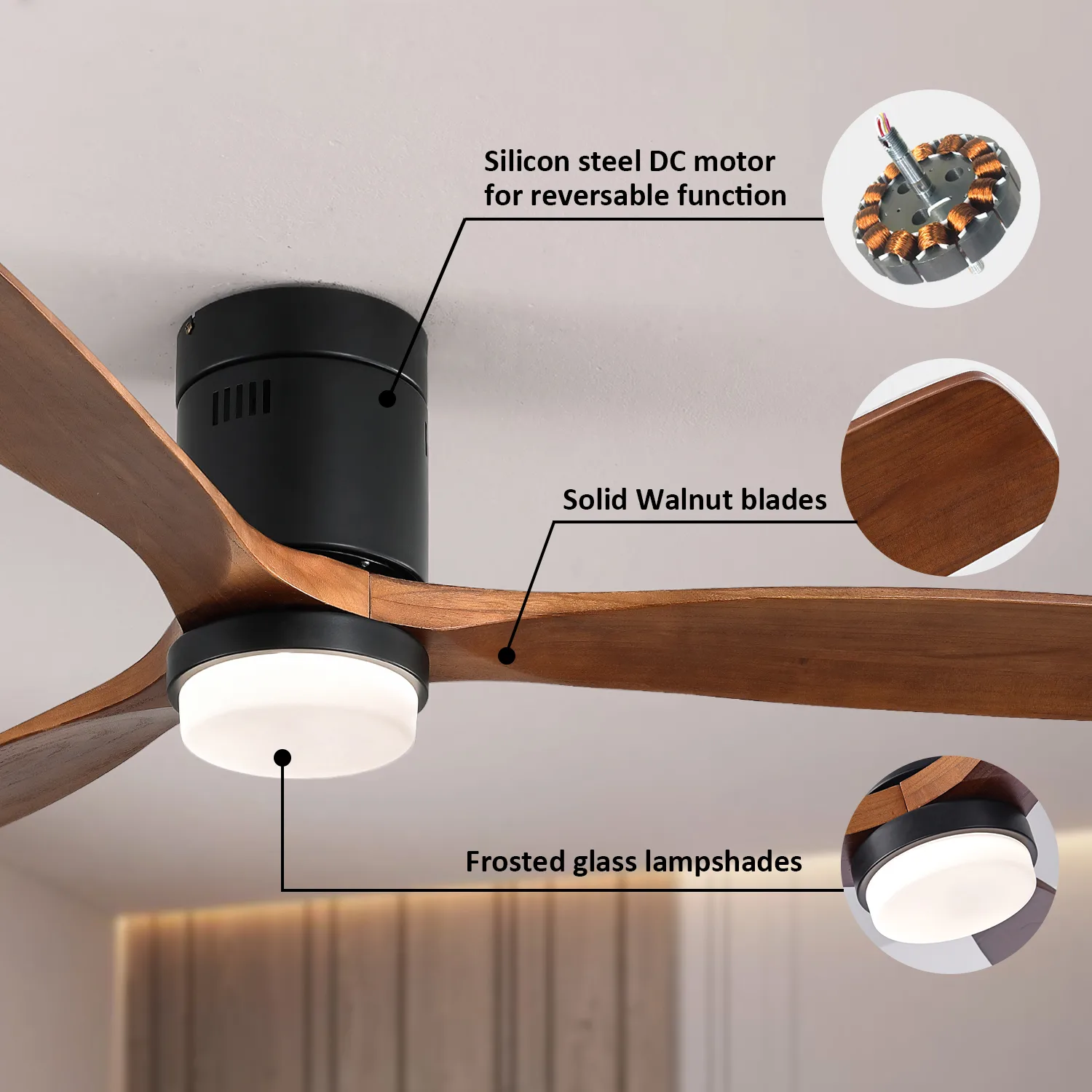
DC (Direct Current) motor: More energy-efficient, quieter, and smoother speed control
💡 If your budget allows, choosing a DC motor ceiling fan is more cost-effective, especially in quiet places like bedrooms and studies. - Control Methods
📍 Pull cord control: Simple and traditional
📍 Wall switch control: Convenient operation with a fixed panel
📍 Remote control: Convenient speed adjustment/timing function
📍 Smart control (Wi-Fi/Voice): Integrates with smart home systems
👉 Recommended control methods include multi-speed adjustment and timing functions. - Design Style and Materials
Style options:
Modern minimalist: Metal/black and white
Nordic wood: Warm and natural
Antique industrial: Retro style
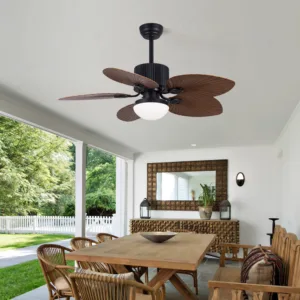
Outdoor waterproof models: Suitable for balconies/patios where moisture resistance is needed
📌 Materials: Metal is more durable, while wooden blades are quieter and more aesthetically pleasing. - Installation Height and Safety Distance
📏 Standard Recommendation:
The bottom edge of the fan blades should be at least 2.3 meters from the ground.
For rooms with low ceilings, consider a flush-mount model.
Ensure there are no obstacles within the fan blade’s rotation range during installation. - Additional Features Selection
✅ Reversible Function: Blows cool air in summer, circulates warm air in winter
✅ Integrated LED Ceiling Light: Saves space and provides lighting
✅ Timer Shutdown: More energy-efficient for bedroom use
✅ Wind Mode: Simulates natural wind (more comfortable) - Energy Efficiency and Power
Look at the Fan Energy Efficiency Ratio (CFM/W): Higher values indicate more airflow per unit of power.
Ceiling fans consume significantly less power than air conditioners, but energy efficiency varies considerably between different models.
📦 Purchase Recommendations Summary
📌 Small rooms → 90–110 cm standard ceiling fan
📌 Large spaces/living rooms → 120–140+ cm, prioritize DC motor
📌 Low ceilings → Flush-mount type
📌 Limited budget → Entry-level AC motor model
📌 For a comfortable experience → Remote control + multi-speed adjustment + timer
✔ Airflow (CFM) is a key indicator of air circulation efficiency
✔ Motor type: DC motors are more energy-efficient and quieter than traditional AC motors
✔ Reversible airflow function: Blows cool air downwards in summer, circulates warm air upwards in winter
✔ Installation height: For low ceilings, choose a flush-mount/low-profile model for safety
✔ Smart control compatibility: Supports remote control, wall switch, or smart home integration for greater convenience