

There is no absolute superiority or inferiority between flush-mount and downrod-style ceiling fan lights; the choice primarily depends on your home’s ceiling height, safety requirements, and personal preferences.
Key Deciding Factors: Ceiling Height and Safety Requirements
Ceiling Height is the Primary Factor: The selection of a ceiling fan light relies heavily on your room’s clear height (the distance from the ceiling to the floor).
Specific Selection Criteria are as follows:
Ceiling Height Below 2.5–2.7 Meters: Prioritize flush-mount ceiling fan lights or models with the shortest available downrods to ensure safety. Since flush-mount units attach directly to the ceiling, they maximize vertical clearance and prevent the bottom of the fan from hanging too low.
Ceiling Height Between 2.7–3.3 Meters: This represents the most common standard ceiling height. You may use the fan’s original standard downrod; both flush-mount and downrod styles are viable options, and all fan models are suitable.
Ceiling Height Exceeding 3.3 Meters: You will need to select a ceiling fan light equipped with an extended downrod. The length of the extended downrod can typically be calculated using the formula: “Room Height – 2.8 meters,” ensuring the fan operates at an appropriate height.
Safety Clearance is a Non-Negotiable Standard: Regardless of the type chosen, you must ensure that the fan blades are positioned at least 2.1 meters above the floor. Falling below this height poses safety risks—specifically, the potential for head injuries—and may also compromise the fan’s airflow efficiency. If your ceiling height is below 2.6 meters, a flush-mount unit is almost the only safe option.
Other Considerations: Aesthetics, Setting, and Style
Aesthetics and Spatial Perception: Downrod-style ceiling fan lights typically offer greater three-dimensional depth and decorative flair; they present a grander appearance and are well-suited for public areas with sufficient ceiling height, such as living rooms and dining rooms. Flush-mount units, conversely, are simpler and more compact; they create a sense of greater spaciousness within the room and are particularly suitable for bedrooms with lower ceilings or a minimalist design aesthetic.
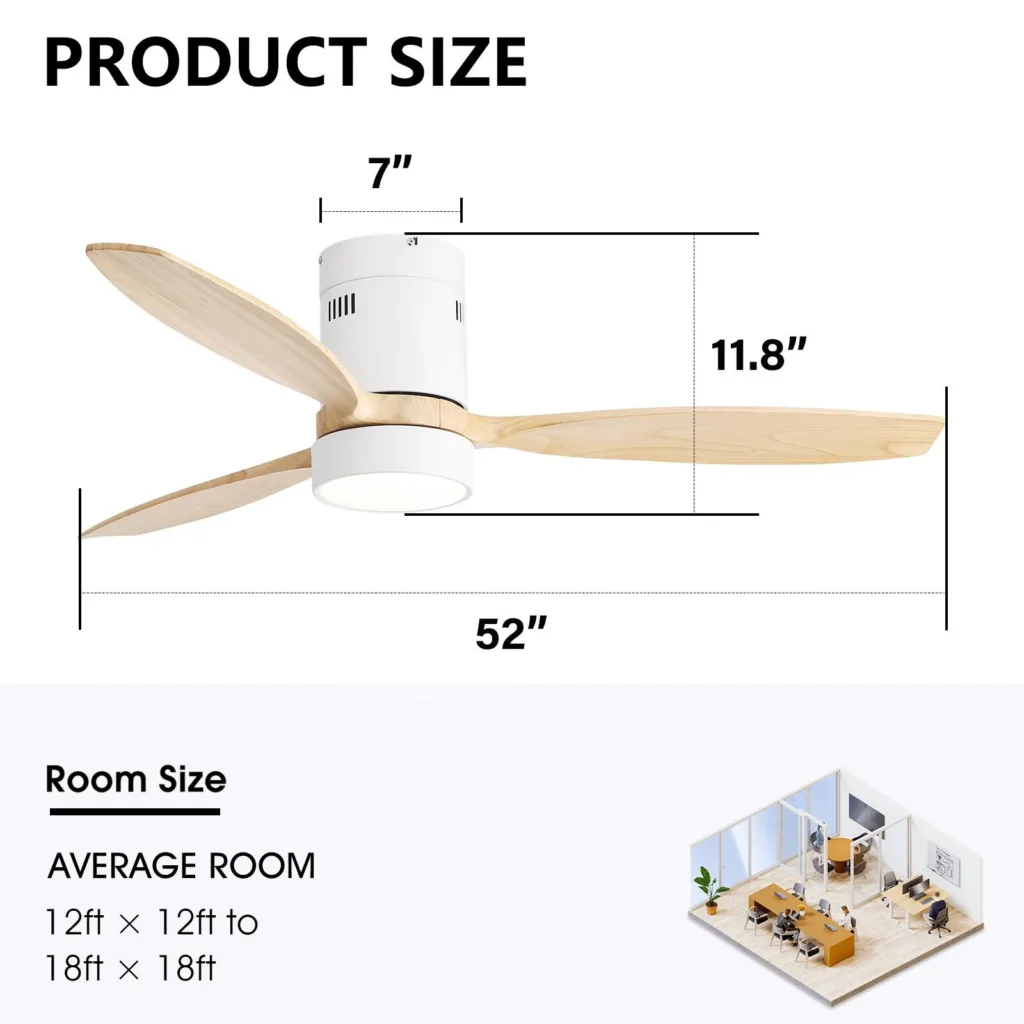
Applicable Settings:
Living Rooms and Dining Rooms: Most people tend to opt for the downrod style, as it is more effective at elevating the decorative sophistication and visual layering of the space.
Bedrooms and Low-Ceiling Spaces: Ceiling-mount models are more suitable here. Once installed, they sit closer to the ceiling, offering enhanced safety—a feature particularly beneficial for households with children.
Matching Interior Design Styles: When making a selection, it is essential to consider how well the fixture harmonizes with your home’s overall decor. Downrod-style fans may be better suited for “light luxury,” European-style, or designs where the lighting fixture serves as a visual focal point; conversely, ceiling-mount fans are a better match for modern, minimalist, or Nordic-style interiors.
Functionality and Maintenance: Since both types share identical core motor components, there is no fundamental difference in their functional performance. However, ceiling-mount models are generally easier to clean and maintain due to their simpler structure, whereas downrod-style fans may require periodic cleaning of both the downrod and the fan blades.
Purchasing Advice and Product Examples
Measure Ceiling Height; Prioritize Safety: Before making a purchase, be sure to precisely measure the clear ceiling height of your room and strictly adhere to the aforementioned height guidelines when selecting a fan type.
Consider Usage Scenarios and Personal Preferences: Clearly define the intended use of the room where the ceiling fan light will be installed (e.g., living room, bedroom), and weigh your priorities regarding aesthetics, safety, and ease of maintenance.
Reference Specific Products: If you have determined that you require a downrod-style ceiling fan light—or related accessories—the market offers a wide variety of options to choose from.