

Smart wooden ceiling fans are high-end home products that combine the aesthetic design of natural wood with modern intelligent control technology, widely used in living rooms, bedrooms, dining rooms, studies, and commercial spaces.
Many consumers focus on an important question when purchasing: What is the lifespan of a smart wooden ceiling fan?
The following is a detailed description of smart wooden ceiling fans:
Lifespan of Smart Wooden Ceiling Fans
Generally, a high-quality smart wooden ceiling fan can last 10–15 years or more. With proper installation and normal daily use, core components can last even longer.
Lifespan mainly depends on the following key factors:
- Motor Quality (Core Lifespan Determinant)
The motor is the core component of the ceiling fan. High-quality products typically use a DC brushless motor, which has the following advantages:
Lower energy consumption
Quiet operation
Less mechanical wear
Longer service life (up to 15 years or more)
Compared to traditional AC motors, DC motors have a longer lifespan, lower maintenance requirements, and are more suitable for long-term home use. - Wooden Fan Blade Material
High-end smart wooden ceiling fans typically use:
Solid wood (such as birch, oak, walnut)
Multi-layer solid wood composite structure
High-strength, anti-deformation treated wood
After moisture-proof, crack-proof, and anti-deformation treatment, it can be used stably for more than 10 years under normal indoor conditions, without easily warping or cracking. - Smart Control System Lifespan
Smart wooden ceiling fans usually support:
Remote control
Mobile app control
Voice assistant connection (such as Amazon Alexa, Google Assistant)
The smart module uses a stable chip solution, and the average lifespan of the electronic system is 8-10 years or more. Even if an upgrade is needed later, replacing the smart module is relatively convenient and does not affect the main motor structure.
- Daily Maintenance
Proper use and maintenance can significantly extend the product’s lifespan:
Regularly clean the fan blades to remove dust
Avoid prolonged high-speed operation
Avoid humid or highly corrosive environments
Properly install and regularly check the fixing structure
Good usage habits can keep the ceiling fan running stably for a long time.
Lifespan Comparison with Traditional Ceiling Fans
| type | Average service life |
|---|---|
| Standard AC ceiling fan | 5–8 years |
| High-quality smart wooden ceiling fan | 10–15 years or more |
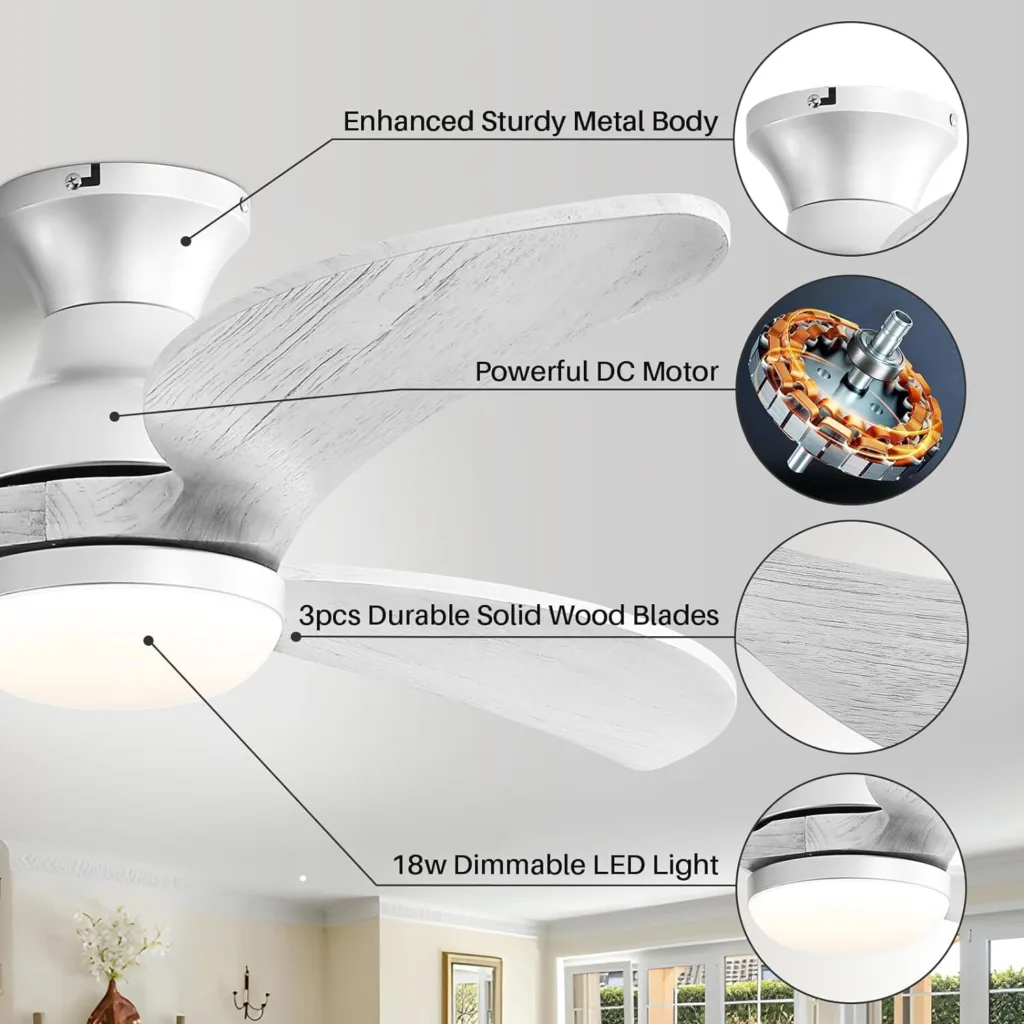
It’s clear that smart wooden ceiling fans offer advantages in durability and long-term operating costs.
Is it a worthwhile long-term investment?
For consumers who value quality of life and home aesthetics, smart wooden ceiling fans are not just functional appliances, but also an integral part of spatial design. Their long lifespan, low energy consumption, low noise, and simple maintenance make them a high-value, long-term home investment.
Summary: In a normal household environment, high-quality smart wooden ceiling fans:
✅ Have a lifespan of 10–15 years or more
✅ Have a longer motor lifespan
✅ Have a stable and durable wooden structure
✅ Have a smart system that supports long-term use
Choosing a reputable brand and proper installation and maintenance can ensure stable operation for over ten years.
For more information on product specifications, warranty policies, or customized solutions, please contact our customer service team.