

The Ultimate Guide to Installing a Modern Retractable & Silent Ceiling Fan
Modern ceiling fans are a marvel of design and engineering. They combine powerful airflow with silent, energy-efficient DC motors, and the retractable blades offer a sleek, minimalist look when not in use. This guide will walk you through the entire process, from planning to the final flip of the switch.
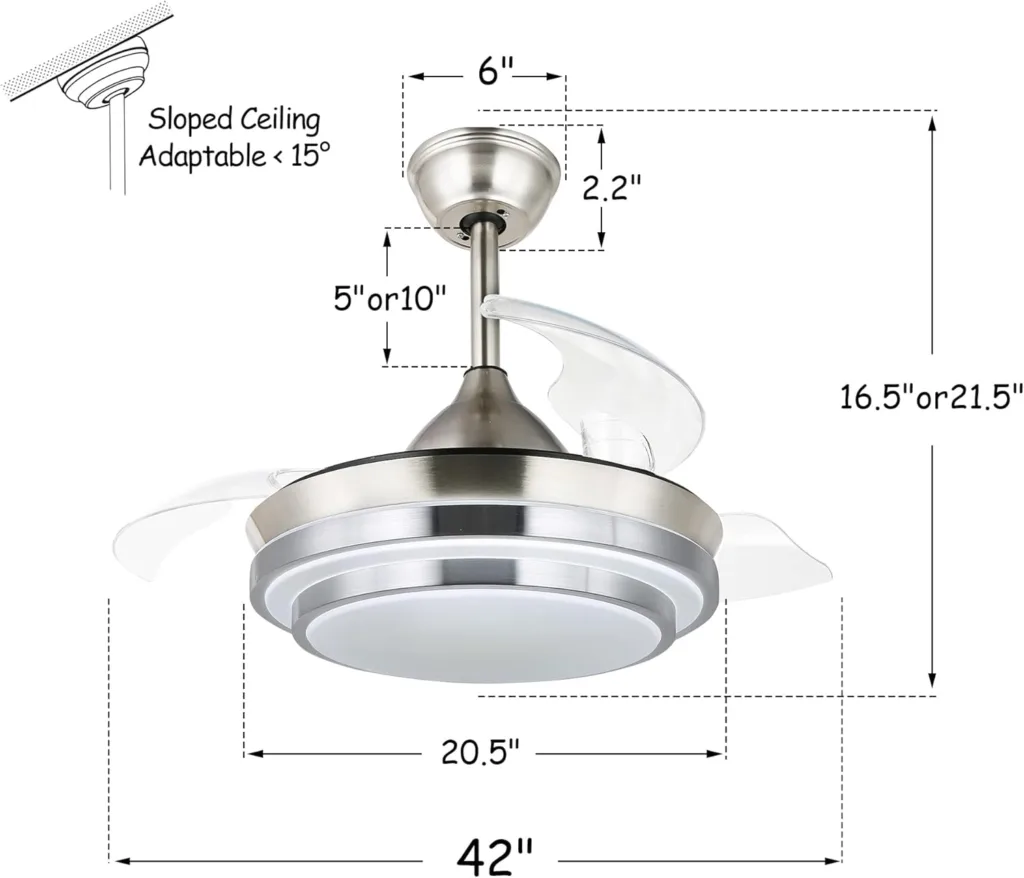
Part 1: Pre-Installation Planning
Don’t even open the box yet. Proper planning is the key to a smooth and safe installation.
1. Choose the Right Fan for Your Room
- Size Matters: Fan blade span is crucial.
- Up to 75 sq. ft. (e.g., bathroom, walk-in closet): 29-36″ blades
- Up to 144 sq. ft. (e.g., small bedroom, office): 36-44″ blades
- Up to 225 sq. ft. (e.g., master bedroom, kitchen): 44-54″ blades
- Over 225 sq. ft. (e.g., large living room): 54″ or larger blades; consider two fans.
- Ceiling Height: This is critical for retractable blades.
- Standard Ceilings (8-9 ft): Most fans can be mounted flush (“hugger”) or with a short downrod.
- High Ceilings (10 ft+): You will need a longer downrod to bring the fan down to the optimal height (blades should be 7-9 feet from the floor). Ensure the blades have clearance when fully extended.
- The “Silent” Feature: This is almost always due to a DC motor. DC motors are significantly quieter, more energy-efficient, and offer more speed options than traditional AC motors. Look for this in the product specifications.
2. Check Your Electrical Box
This is the most important safety check.
- Is there an existing light fixture? If so, you’re likely in good shape.
- Is the box fan-rated? Standard light boxes are plastic or thin metal and are NOT designed to support the weight and vibration of a ceiling fan. A fan-rated box is usually metal and secured directly to a ceiling joist or a support bar. If your box is not fan-rated, you MUST replace it. This is a common point where people call a professional.
3. Read the Manufacturer’s Manual
This guide is universal. Your specific fan has its own quirks. The manufacturer’s manual is the final authority. Read it cover to cover before you begin.
Part 2: Tools & Materials Checklist
Gather everything you need beforehand.
Essential Tools:
- Sturdy Ladder
- Voltage Tester (Non-contact is easiest)
- Drill with assorted bits
- Phillips and Flathead Screwdrivers
- Wire Strippers
- Needle-Nose Pliers
- Adjustable Wrench or Pliers
Materials (Often Included with Fan):
- Wire Nuts (It’s good to have extras on hand)
- Downrod (if required for your ceiling height)
- The Ceiling Fan Kit (Motor, blades, light kit, mounting bracket, hardware)
Safety Gear:
- Work Gloves
- Safety Glasses
Part 3: Safety First – The Non-Negotiables
- KILL THE POWER: Go to your home’s circuit breaker panel and turn off the breaker that powers the room you’re working in.
- TEST THE WIRES: Use your voltage tester on the wires in the electrical box to confirm there is zero power. Test the wall switch too. Do not proceed until the tester reads nothing.
- SECURE THE FAN BOX: As mentioned, ensure it’s a fan-rated box securely fastened to a ceiling joist.
- GET A HELPER: Ceiling fan motors are heavy and awkward. Having someone to help you lift and hold the motor while you wire it can prevent injury and damage.
Part 4: Step-by-Step Installation Guide
Let’s get to it!
Step 1: Prep and Assemble on the Ground
It’s far easier to assemble parts of the fan on the floor than on a ladder.
- Unpack all components and lay them out. Check against the manual’s parts list.
- Attach the Downrod: Thread the downrod into the fan motor housing and secure it with the provided cotter pin and set screw.
- Install the Receiver: Most modern fans come with a wireless receiver for the remote control. It usually fits inside the motor housing. Follow the manual to install it and connect its wires to the fan’s wires.
- Attach the Canopy: Slide the decorative canopy (the part that covers the mounting bracket) onto the downrod. Don’t tighten it yet; just let it rest there.
Step 2: Install the Mounting Bracket
- Remove your old light fixture.
- Take the fan’s mounting bracket and secure it to the electrical box using the long screws provided. Ensure it is tight and won’t move. Some brackets have a “J-hook” or ball-and-socket mechanism; make sure it’s oriented correctly.
Step 3: Hang the Fan Motor
- With your helper’s assistance, lift the fan motor and hang it from the mounting bracket. The J-hook or ball joint is designed to allow the fan to hang freely, leaving both of your hands free for wiring.
Step 4: The Wiring (The Critical Part)
This is where you connect the fan to your home’s electrical system. The standard color code is:
- From House: Black (Hot), White (Neutral), Green or Bare Copper (Ground)
- From Fan: Black (Fan Motor), Blue (Light Kit), White (Neutral), Green (Ground)
Connections:
- Ground to Ground: Connect the green/bare wire from the ceiling to the green wire from the fan.
- Neutral to Neutral: Connect the white wire from the ceiling to the white wire from the fan.
- Hot to Hot: Connect the black wire from the ceiling to the black wire from the fan (and sometimes the black wire from the receiver).
- Hot for Light: Connect the blue wire from the fan (for the light) to the black wire from the fan/receiver, as directed by the manual. This allows the remote to control both.
How to Connect:
- Strip about ½ inch of insulation from the end of each wire.
- Hold the two corresponding wires together so the ends are parallel.
- Twist them clockwise with pliers.
- Screw a wire nut onto the twisted wires clockwise until it’s tight.
- Give the wires a gentle tug to ensure they are secure.
- Tuck all the connected wires neatly up into the electrical box.
Step 5: Final Assembly
- Lift the canopy and secure it to the mounting bracket with the provided screws. There should be no wires pinched.
- Install the Light Kit: If your fan has a separate light kit, connect its plug to the receptacle on the bottom of the fan motor and secure it with the screws.
- Attach the Retractable Blades: This is often the final step.
- Each blade will have a metal arm attached.
- Align the screws on the arm with the holes on the motor housing.
- Finger-tighten all screws first, then go back and tighten them firmly. Do not overtighten, as you could strip the screw holes.
- Give the blades a gentle spin to ensure they retract and deploy smoothly.
Step 6: Install Batteries and Power Up
- Install the batteries in the remote control.
- Go to the breaker panel and turn the power back on.
Part 5: Testing and Final Adjustments
1. The Moment of Truth
Use the remote to test all functions:
- Light On/Off
- Fan Off / Low / Medium / High
- Reverse Function (for summer/winter use)
2. Check for Wobble
It’s normal for a new fan to have a slight wobble.
- Listen: A silent DC motor should be nearly inaudible on low settings. Any loud clicking or grinding noise indicates a problem.
- Look: Watch the fan from the side. If it wobbles noticeably, it needs balancing.
- Use the Balancing Kit: Most fans include a small balancing kit with clips and weights. The manual will guide you through the process of finding the heavy blade and adding a weight to correct the imbalance.
When to Call a Professional Electrician
Don’t be a hero. Call a pro if:
- You are not 100% confident the power is off.
- Your home has aluminum wiring (common in houses built before 1970).
- There is no existing electrical box where you want the fan.
- Your existing box is not fan-rated and you don’t know how to install a support brace.
- At any point, you feel unsure or uncomfortable with the process.
Enjoy your new modern, silent, and space-saving ceiling fan! You’ve just added a functional and stylish centerpiece to your room.