

Wooden and iron fan blades each have their advantages and disadvantages. The choice should be made based on factors such as the usage environment, style preference, budget, and willingness to maintain.
The following is a comparative analysis of the products:
Core Comparison:
Durability and Corrosion Resistance
Iron Fan Blades: Sturdy and durable, but prone to rusting in humid environments, affecting appearance and lifespan.
Wooden Fan Blades: Naturally beautiful, but susceptible to moisture, warping, or cracking, and may mold or even be infested by termites with prolonged exposure to high humidity.
Safety
Iron Fan Blades: Heavier; if of poor quality or insufficient protection, there is a risk of breakage and ejection; noisier at high speeds.
Wooden Fan Blades: Lighter than metal, with better damping performance, resulting in quieter and smoother operation; safer than metal even when touched.
Suitable Environment
Iron Fan Blades: Suitable for dry, well-ventilated indoor spaces (such as dry northern regions).
Wooden fan blades: Suitable for homes with a natural, Chinese, Scandinavian, or Japanese style, but should be avoided in high-humidity areas such as bathrooms and kitchens.
Aesthetics and Matching
Iron fan blades: Suitable for industrial and retro styles, but color choices are limited.
Wooden fan blades: Natural texture, rich colors (light to dark, patterned), easier to blend with home décor.
Price and Maintenance
Iron fan blades: Lower price, but require regular rust prevention treatment.
Wooden fan blades: Higher price, require regular cleaning with wood polish to prevent warping.
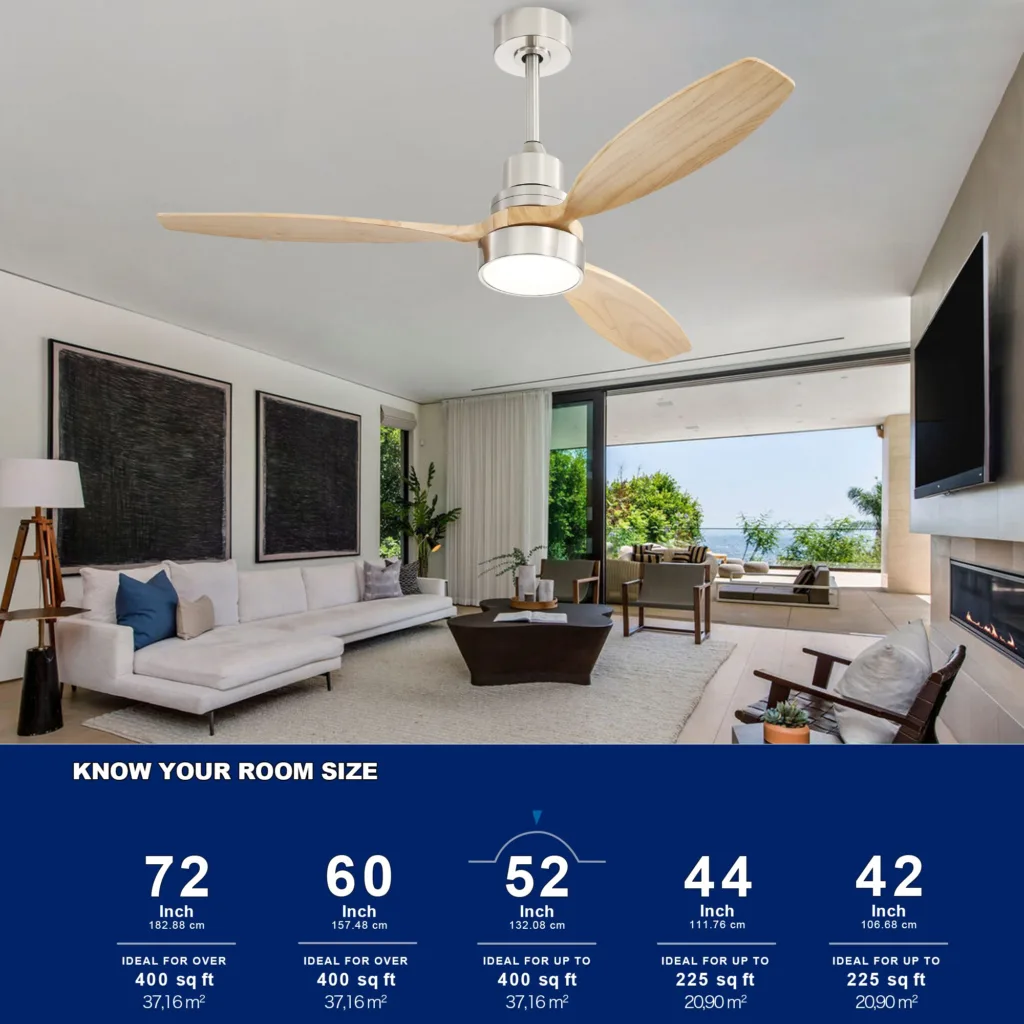
Recommendations
Prefer wooden fan blades if:
Your home environment is dry.
You prioritize natural aesthetics and quiet operation;
You have a sufficient budget and are willing to perform regular maintenance.
Prefer iron fan blades if:
You live in a dry climate (e.g., northern regions);
You value durability and cost-effectiveness;
You can ensure good ventilation and avoid moisture in the installation environment.
⚠️ Note: If you live in a southern coastal area or a rainy and humid region, you should choose both materials with caution, or consider stainless steel or synthetic wood/ABS material as alternatives, the latter being more moisture-proof, lightweight, and safe.